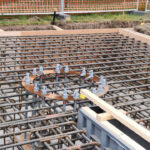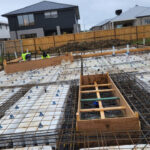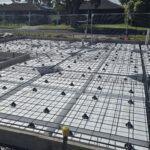
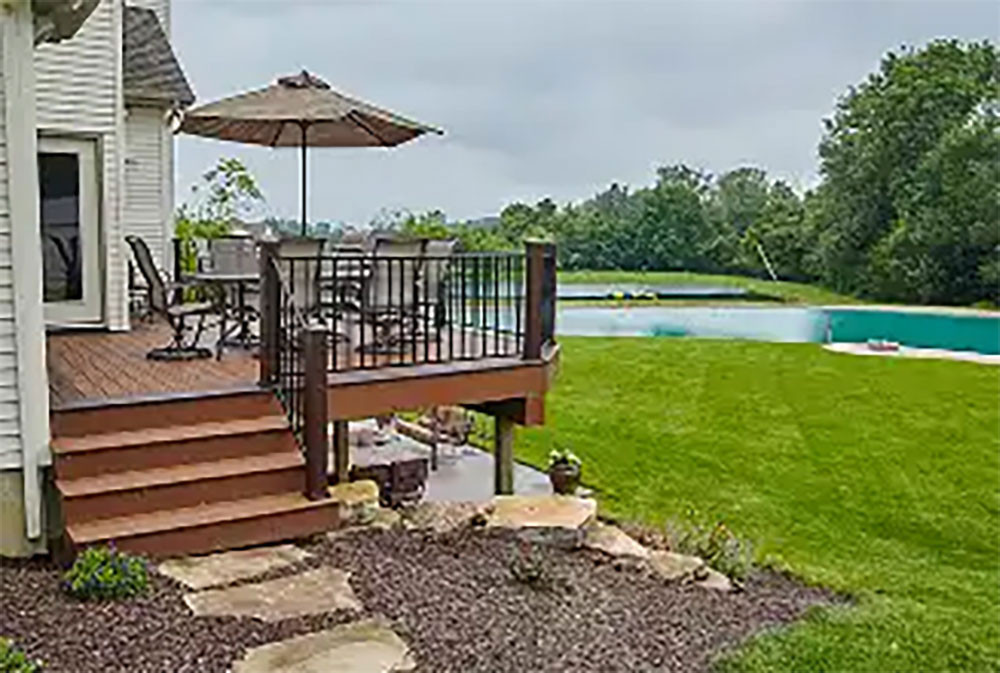
A swimming pool is a large structure holding a very heavy load, often placed near boundaries, retaining walls or the house itself. Structural engineering input is commonly needed where a pool sits close to a building, on a slope, above or below retaining, or near an easement. In-ground pools require a building permit in Victoria.
Here's where the engineering questions arise.
Why pools are a structural question
Water is heavy — a domestic pool holds a substantial mass, and that load sits in the ground next to whatever else is nearby. Two things follow. First, the pool shell and its surrounds have to carry that load. Second, excavating for the pool changes the ground support around it, which matters enormously if there's a building, a boundary or a retaining wall nearby.
That second point is what catches people out. The pool itself might be designed by the pool builder, but the effect of a deep excavation next to an existing footing is a separate question.
When you're likely to need a structural engineer
- The pool is close to the house or another structure, where excavation could undermine existing footings
- The site slopes, so the pool needs retaining on one or more sides
- The pool sits above or below a retaining wall, adding surcharge load or removing support
- An easement runs nearby, restricting where you can excavate and build
- The pool is elevated or partially above ground, requiring structural support
- A deck, pool house or surround is being built over or beside the pool
- The soil is reactive or poor, affecting how the excavation behaves
The zone of influence
An important concept: excavating near an existing footing can remove the ground that footing relies on. Engineers consider the zone of influence around a footing — dig within it, and the footing may need support or the excavation may need to be designed to protect it.
This is why "the pool is only a couple of metres from the house" isn't reassuring — it's exactly the situation that needs assessment. Where an adjoining property is involved, protection works obligations may also apply.
Retaining, slopes and surrounds
On a sloping block, a pool almost always brings retaining with it — either to create a level platform or to hold back ground beside the pool. Those retaining structures need design in their own right, and their interaction with the pool matters: a retaining wall behind a pool imposes load, and a pool beside a retaining wall can affect its support.
Our residential structural engineering team designs retaining, footings and structural support for pool projects across Melbourne, working alongside your pool builder.
Permits and drainage
In-ground and semi-in-ground pools require a building permit in Victoria, along with compliant safety barriers. There's also a drainage dimension: a pool changes site levels and hard surfaces, and where water goes matters — both for the pool surrounds and for the site's stormwater requirements.
Planning a pool near your house or on a slope? Talk to a Melbourne structural engineer before excavation begins.
Frequently asked questions
Do I need a structural engineer for a swimming pool? Often, particularly where the pool is close to a building, on a sloping site, involves retaining, or sits near an easement. The pool builder designs the pool; the engineer addresses its effect on the surrounding structures and ground.
Do pools need a building permit in Victoria? In-ground and semi-in-ground pools require a building permit, as do the safety barriers around them.
Can I build a pool close to my house? Sometimes, but excavating near existing footings can undermine them. An engineer should assess the situation before excavation.
What if my block slopes? Sloping sites usually need retaining structures around the pool, which require structural design and careful consideration of how they interact with the pool.
What about building a pool near an easement? Easements restrict what can be built and excavated nearby, and separate authority consent is generally required. Check before finalising the pool location.