
By QED Consulting Engineers — structural & civil engineers, Notting Hill, Melbourne
Telecommunications towers, monopoles and rooftop antennas look simple from the ground, but they're a demanding structural problem: tall, slender structures carrying equipment, exposed to full wind loads, and relying entirely on their foundations to stay upright. The foundation design is where much of the engineering sits — because a tower is only as stable as what's anchoring it to the ground.
Here's an overview of how these structures and their foundations are engineered.
What makes tower structures different
Most buildings are relatively low and squat, with loads travelling straight down. A telecommunications tower is the opposite: tall, slender and carrying antennas and equipment at height. That geometry means wind is the dominant load, and it doesn't just push sideways — it creates a large overturning moment, a rotational force trying to tip the structure over.
Resisting that overturning is the central challenge, and it's resolved largely in the foundation.
Monopole and tower foundations
The foundation has to anchor the structure against both the vertical load and, more critically, the overturning moment from wind. Common approaches include:
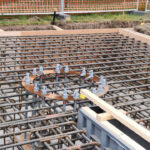
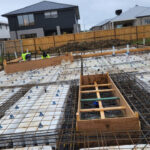
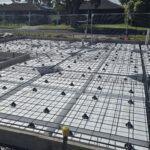
- Pad footings — a large mass of reinforced concrete resisting overturning by weight and bearing
- Pile or bored pier foundations — reaching deeper for support and uplift resistance, used where soil conditions or loads require it
- A combination, depending on the ground and the structure
The right solution depends on the tower height and equipment, the wind loads (designed to AS 1170.2), and the site's soil conditions — which is why a geotechnical understanding of the site feeds directly into the foundation design.
Rooftop antennas and mounts
Not all telecommunications structures are standalone towers. Antennas and equipment are frequently mounted on existing rooftops — which raises a different structural question: can the existing building carry the new loads, including the wind forces on the antennas and their mounts?
This is essentially a structural adequacy assessment of the host building, plus the design of the mounting structure that transfers loads safely into it. It's the same principle as any rooftop addition: the existing structure has to be checked, not assumed.
What the engineer designs
For telecommunications structures, engineering typically covers:
- Foundation design for towers and monopoles — sized for overturning and soil conditions
- Structural assessment of existing rooftops for antenna installations
- Mounting and support structures for equipment
- Wind load analysis to the relevant standards
- Documentation for approval and construction
QED has delivered foundation engineering for telecommunications structures — you can see an example in our project portfolio. Our commercial and industrial engineering team handles this specialised work across Melbourne and beyond, with complex or non-standard cases supported by finite element analysis.
Got a telecommunications or antenna project?
Talk to a Melbourne structural engineer about the structural and foundation design.
## Frequently asked questions
Who designs telecommunications tower foundations?
A structural engineer, working with the site's geotechnical conditions, designs the foundation to resist the vertical load and the overturning moment from wind.
What foundation does a monopole need?
Commonly a large reinforced concrete pad footing, or a pile/bored pier foundation where soil or loads require deeper support. It depends on the tower and the ground.
Can antennas be mounted on an existing rooftop?
Often, but the existing structure must be assessed for the added loads, including wind on the antennas, and a mounting structure designed to transfer those loads safely.
What load governs tower design?
Wind — particularly the overturning moment it creates on a tall, slender structure. Foundations are designed largely to resist that.