By QED Consulting Engineers — structural & civil engineers, Notting Hill, Melbourne
Trees make a home, but their relationship with your footings is more complicated than most people realise — and in Melbourne, with its reactive clay soils, it can go both ways. A tree too close can contribute to foundation movement; but removing a large established tree can also cause movement. Understanding why helps you make the right call.
Here's how trees and footings interact.
Why it's about moisture, not roots pushing
People picture tree roots physically shoving footings around. That happens occasionally, but the bigger issue in Melbourne is moisture.
Much of Melbourne sits on reactive clay that swells when wet and shrinks when dry. A large tree draws enormous amounts of water from the soil, drying it out and causing it to shrink — and that shrinkage can pull footings down unevenly. It's the tree's effect on soil moisture, more than its roots, that moves foundations.
This is why the same tree that seems harmless for years can start causing problems during a long dry spell.
The counter intuitive part: removing a tree can also cause movement
Here's what catches people out. If a large tree has been drying out the clay beneath a home for years, the soil has adjusted to that drier state. Remove the tree suddenly, and the soil re hydrates and swells back up — lifting footings that had settled, sometimes causing as much movement as the tree was.
So "just cut it down" isn't automatically the safe answer. On a reactive clay site with an established tree near the house, tree removal is a decision worth taking engineering advice on, not a purely argoricultural one.
Signs trees may be affecting your footings
Watch for cracking that appears or worsens seasonally (worse in summer/drought), doors and windows that stick at certain times of year, or movement concentrated on the side of the house nearest a large tree. These patterns point to soil moisture movement rather than, say, a construction defect.
That said, cracking has many possible causes — so diagnosis matters before action.
What an engineer can advise
Where trees and footings are in question, a structural engineer can:
- Assess whether observed movement is consistent with tree-related soil moisture change
- Advise on the risks of removing a significant tree near the house
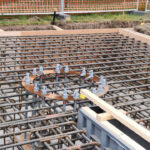
- Recommend footing solutions for building near trees — deeper footings or piers that reach beneath the zone of seasonal moisture movement
- Consider drainage, which interacts with soil moisture
Our residential structural engineering team assesses foundation movement — including tree-related causes — across Melbourne.
Building near existing trees
If you're building or extending near an established tree, the footing design can account for it from the start — typically with deeper footings or piers designed for the soil movement the tree influences. Designing for it upfront is far cheaper than remediating movement later. It also interacts with any drainage design, since managing water around the home affects soil moisture too.
Concerned about a tree near your home — or movement you think it's causing?
Talk to a Melbourne structural engineer.
Frequently asked questions
Can tree roots damage my foundations?
More often it's the tree's effect on soil moisture — drawing water from reactive clay and causing it to shrink — that moves footings, rather than roots physically pushing them.
Can removing a tree cause my house to move?
Yes. If a tree has dried out reactive clay for years, removing it can let the soil re hydrate and swell, lifting footings. It's worth engineering advice before removing a large tree near the house.
How far from the house should trees be?
It depends on the species, the soil and the footings. Rather than a single rule, an engineer can advise for your specific situation, especially on reactive clay.
How do I know if a tree is causing cracking?
Cracking that worsens seasonally or concentrates near a large tree can point to tree-related soil movement — but diagnosis by an engineer is the reliable way to confirm.