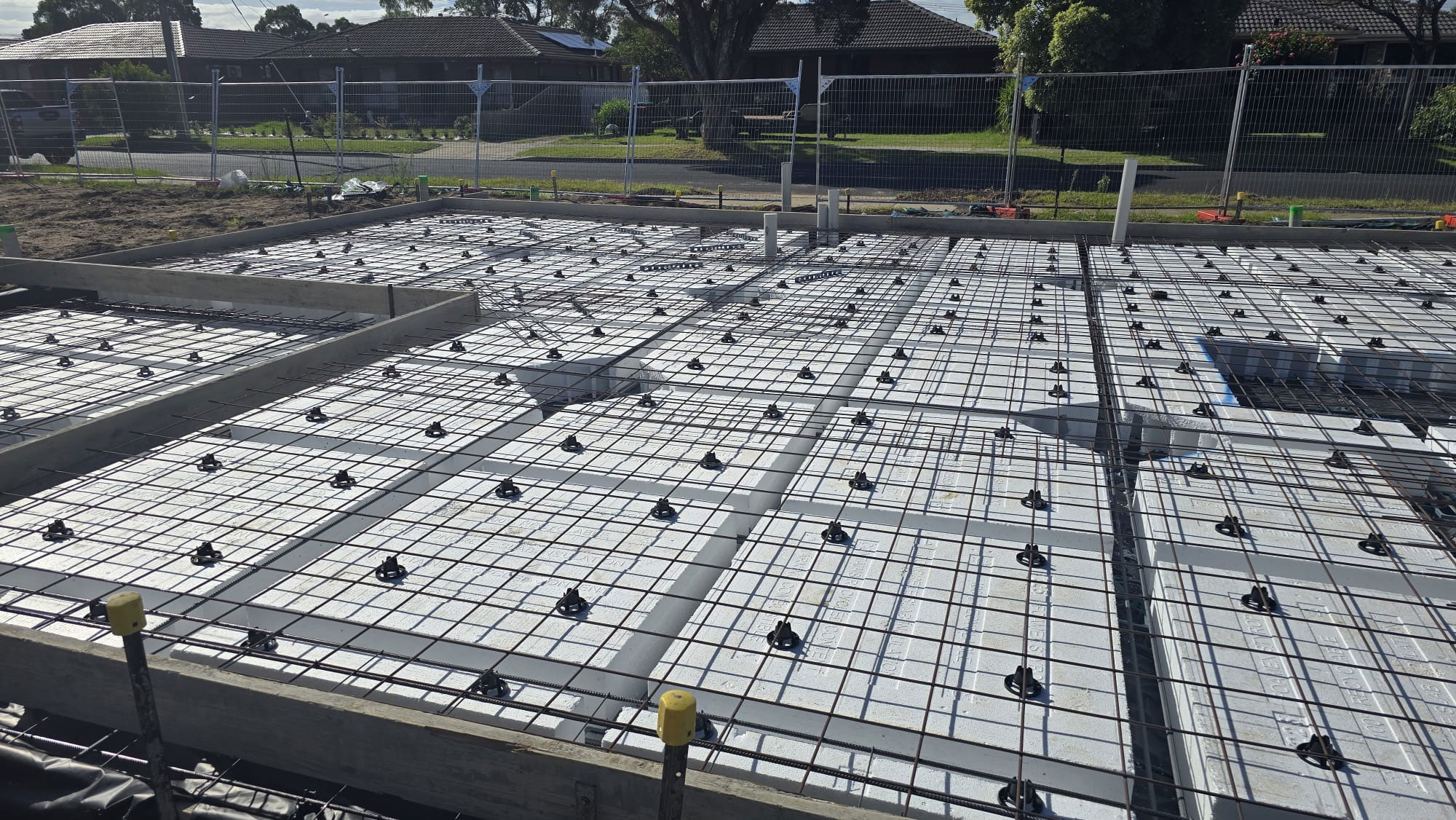
By QED Consulting Engineers — structural & civil engineers, Notting Hill, Melbourne
A waffle slab is a type of concrete foundation that sits on top of the ground using a grid of polystyrene pods to form voids, leaving a "waffle" pattern of concrete ribs underneath. It's one of the two most common house foundations in Melbourne — the other being the raft slab — and the right choice depends almost entirely on your soil.
If you're building or extending a home around Melbourne, understanding how a waffle slab works (and where it doesn't suit) can save you from costly problems like cracking and slab movement down the track. Here's what every homeowner should know before the concrete is poured.
What is a waffle slab?
A waffle slab — sometimes called a waffle pod slab or waffle raft — is a slab-on-ground foundation built above the natural ground level rather than dug into it.
The build process is straightforward:
- The building pad is levelled and prepared, and a vapour barrier is laid down.
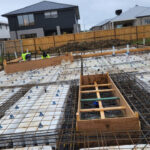
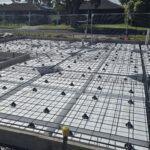
- Lightweight polystyrene void formers (the "pods") are placed in a grid across the pad.
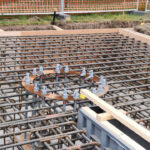
- Steel reinforcement mesh and ribs are set between and over the pods.
- Concrete is poured over the whole grid, filling the gaps between pods to create a network of stiffening ribs and a flat slab on top.
Once finished, a waffle slab looks identical to any other concrete slab — the polystyrene stays hidden underneath, with the concrete ribs doing the structural work.
Waffle slab vs raft slab: what's the difference?
The main alternative is a raft slab (also called a stiffened raft or conventional slab), where edge and internal beams are dug into trenches in the ground and the slab is cast against the soil. A waffle slab, by contrast, sits on the surface.
| Waffle slab | Raft slab | |
| Position | Sits on top of the ground | Beams dug into the ground |
| Excavation | Minimal | More trenching required |
| Concrete & steel | Generally less | Generally more |
| Speed | Faster (modular pods, less digging) | Slower, more labour |
| Best suited to | Flat sites, low–moderately reactive soil | Wide range of soils, including highly reactive and sloping sites |
| Weather sensitivity | Less affected by wet weather | Trenches can flood, slowing work |
Neither is universally "better." The right slab is the one engineered for your block, your soil and your home design.
Are waffle slabs suitable for Melbourne's reactive clay soils?
This is the question that matters most in Melbourne. Large parts of the city — particularly the western and outer suburbs — sit on reactive clay that expands when wet and shrinks when dry. That movement places real stress on foundations.
Every building site in Australia is given a site classification under the standard AS 2870 (Residential Slabs and Footings), based on how much the soil is expected to move:
- Class A / S – stable to slightly reactive
- Class M – moderately reactive
- Class H1 / H2 – highly reactive
- Class E – extremely reactive
- Class P – problem site (fill, poor drainage, trees, etc.)
As a general rule, waffle slabs perform well on non-reactive to moderately reactive (A, S, M) flat sites. On highly or extremely reactive (H1, H2, E) sites, many engineers recommend a stiffened raft slab — or a waffle slab with additional reinforcement and piers — because reactive soil increases the risk of slab heave, where uneven ground movement lifts part of the slab and cracks the building above (sticking doors, jamming windows and wall cracks are common warning signs).
The only way to know which slab suits your block is a soil test and site classification by a geotechnical engineer, followed by a slab design from your structural engineer. Choosing a slab type without this is a gamble. At QED, our residential structural engineering team works with these site conditions every day across Melbourne.
Pros and cons of waffle slabs
Advantages
- Faster to install thanks to modular pods and minimal excavation
- Usually uses less concrete and steel
- Less affected by wet weather, helping keep builds on schedule
- Good thermal performance, with the slab insulated from the ground
Disadvantages
- More sensitive to poor site preparation — any deficiency in the pad can lead to settlement
- Less suited to highly reactive or sloping sites without extra engineering
- Termite management is critical, as the void formers require careful protection detailing
- Polystyrene pods are a petroleum-based product with waste/handling considerations on site
What affects the cost of a waffle slab?
A waffle slab generally uses less concrete and steel than a raft slab and is quicker to install, so on a suitable flat site it can be the more economical option. But the figure on a quote depends on several things:
- Your site classification — more reactive soil means more reinforcement, deeper ribs or piers
- The size and shape of the slab and your home's design
- Site access, slope and preparation required
- Current material and labour conditions
The cheapest slab on paper can become the most expensive if it's the wrong choice for your soil and has to be remediated later. Always get a site-specific design and quote rather than relying on a rule of thumb.
Do you need an engineer for a waffle slab?
Yes. A residential slab is a structural element that must be designed to AS 2870 and comply with the National Construction Code (NCC) before a building surveyor will issue your building permit. Your structural engineer takes the soil report, your home's design and the site conditions, then designs the slab — rib spacing, depth, reinforcement and any piers — so it performs for the life of your home.
At QED Consulting Engineers, we design footing and slab systems for Melbourne homes across the city's varied soil conditions, from stable sites through to highly reactive Class H and problem Class P blocks. If you're planning a new build or extension, we can advise on the right slab early — before it becomes an expensive problem.
Planning a build or extension in Melbourne? Talk to a Melbourne structural engineer and we'll help you get the foundation right from the start.
Frequently asked questions
Is a waffle slab good or bad? Neither — it's the right choice on the right site. Waffle slabs perform well on flat, non-reactive to moderately reactive sites. On highly reactive clay or sloping blocks, a raft slab or additional engineering is often more appropriate.
Waffle slab vs raft slab — which is better? It depends on your soil and site. Raft slabs handle a wider range of soils, including highly reactive clay, while waffle slabs are faster to build on suitable flat sites. Your engineer recommends the right one after reviewing your soil test.
Are waffle slabs a problem on reactive soil? They can be if used on highly reactive (H1, H2, E) sites without extra design measures, because reactive movement can cause slab heave and cracking. A proper site classification under AS 2870 determines whether a waffle slab is suitable.
Does a waffle slab cost more than a raft slab? Not usually — a waffle slab generally uses less concrete and steel and is faster to install, so it can be more economical on a suitable flat site. The right choice still depends on your soil, so always get a site-specific design and quote.
Do I need a structural engineer for a waffle slab? Yes. The slab must be engineered to AS 2870 and comply with the NCC to obtain a building permit. An engineer designs the slab based on your soil report and home design.